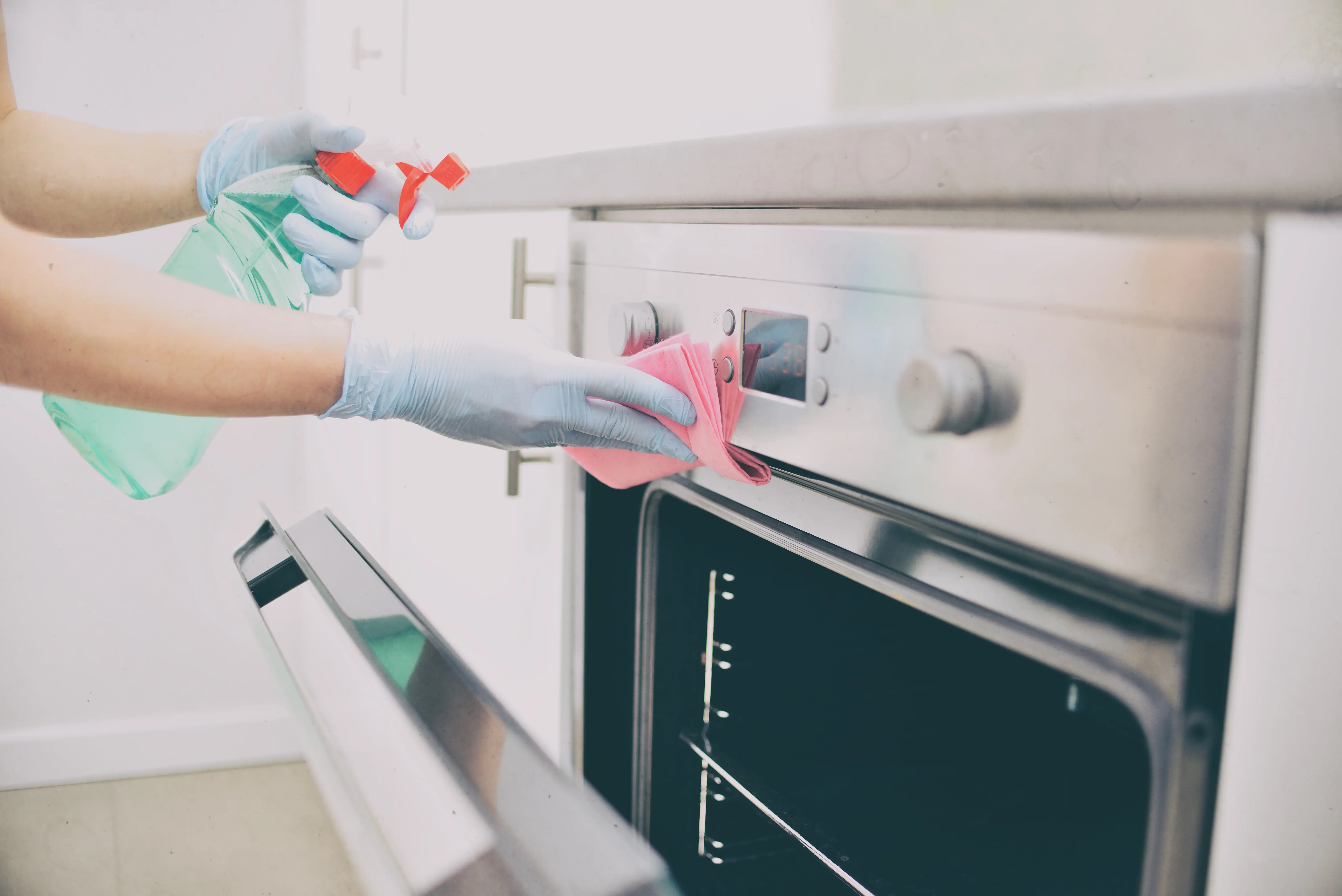
Short answer: take out the racks and trays and soak them in hot soapy water. Coat the inside of the oven with a baking soda paste and leave it for several hours or overnight. Then wipe it out with a damp cloth and a little white vinegar, and clean the door glass last. For heavy, burnt-on grease, a commercial oven degreaser is faster, but follow the label and ventilate well.
The oven is the number one item we see flagged at end of lease inspections, so it's worth doing properly.
What you'll need
- Baking soda and white vinegar (or a commercial oven cleaner)
- A spray bottle
- Rubber gloves
- A plastic scraper or old card (never steel wool on enamel or glass)
- Non-scratch scrubbing pads and microfibre cloths
- A tub or bath for soaking racks
- Old newspaper or towels for the floor
Method 1: Baking soda (gentle, low fumes)
- 1Turn the oven off and let it cool completely.
- 2Remove the racks, trays and any removable side rails. Put them in a laundry tub or bath with hot water and dishwashing liquid to soak.
- 3Make a paste of about ½ cup baking soda with a few tablespoons of water, spreadable like toothpaste.
- 4Coat the inside of the oven (walls, floor and door interior), avoiding the heating elements and fan. Brown, greasy areas can take a thicker layer.
- 5Leave it for at least several hours, ideally overnight.
- 6Wipe it out with a damp cloth. Use a plastic scraper on stubborn spots.
- 7Spray a little white vinegar on any remaining baking soda. It will foam, which helps lift the residue. Wipe it clean.
- 8Scrub the racks with a non-scratch pad, rinse and dry.
- 9Clean the door glass (see below), then put everything back.
Method 2: Oven degreaser (faster, for heavy grease)
Commercial oven cleaners work quickly on carbonised grease but are strong chemicals.
- Read and follow the label exactly, including how long to leave it on.
- Ventilate: open windows and run the rangehood.
- Wear gloves and keep it off your skin and eyes.
- Keep it off heating elements, seals and painted exterior surfaces.
- Never mix cleaning products, especially bleach with vinegar or ammonia-based cleaners, which can release toxic gases.
Don't forget the door glass
Many oven doors have two or three panes, and grease and crumbs get trapped between them. Clean the inside and outside of the door with baking soda paste or degreaser. If your oven's manual shows how to remove the door or inner glass, you can clean between the panes. Only do this if the manual covers it, because some doors are spring-loaded.
How often should you clean your oven?
- Quick wipe of spills: after any big spill, once the oven has cooled
- Full clean: every 3–6 months for regular cooks
- Before moving out: always, because it's one of the first things property managers check
Common mistakes
- Using steel wool or abrasive powders on enamel or glass, which scratches permanently
- Spraying cleaner on hot surfaces, which causes fumes and streaks
- Forgetting the racks and rails, which agents notice straight away
- Skipping the rangehood: grease from cooking sits right above the oven (see our rangehood guide)
Want it done for you?
Oven cleaning is included in every Fresh Plus end of lease clean, and it's available as an extra on regular and deep cleans. We bring the equipment and degreasers, and you get a fixed price upfront.
Frequently asked questions
Can I use the self-clean function? If your oven has pyrolytic self-cleaning, follow the manual. It burns residue to ash, which you then wipe out. Remove the racks first unless the manual says otherwise, and expect heat and smells while it runs.
How long does a full oven clean take? For a moderately dirty oven, allow 1–2 hours of hands-on time plus soaking time. Very heavy grease can take longer.
Is baking soda safe for all ovens? It's gentle and works on most enamel interiors. Always check your oven's manual, especially for special coatings.